




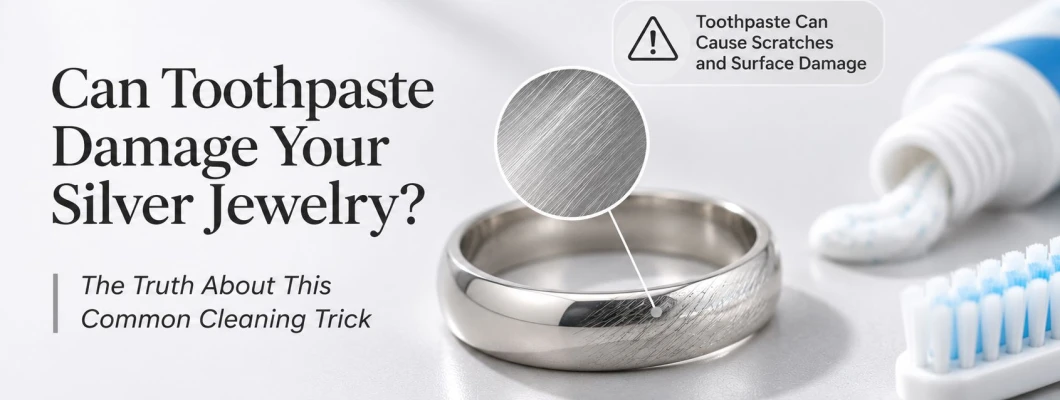
Can Toothpaste Damage Your Silver Jewelry? The Truth About This Common Cleaning Trick
Have you ever used toothpaste to clean a silver ring or necklace? It is one of the most popular home remedies for restoring the shine of jewelry. Many people believe that a little toothpaste and a soft toothbrush are all they need to make tarnished silver look brand new.
But is this method actually safe?
Although toothpaste can appear to remove surface discoloration, it may also cause unwanted damage to silver jewelry. The reason lies in its abrasive ingredients, which are designed to clean tooth surfaces rather than precious metals.
What looks like a simple cleaning solution can gradually affect the finish, shine and delicate details of your favorite jewelry.
In this guide, we explore why toothpaste is not recommended for silver jewelry, how it affects different silver finishes and which cleaning methods are safer.
Why Do People Use Toothpaste to Clean Silver?
Silver jewelry naturally changes appearance over time. Exposure to sulfur-containing compounds in the air and everyday environments can cause a chemical reaction that creates a dark surface layer known as tarnish.
As silver loses its original shine, people often look for convenient ways to restore its appearance.
Toothpaste seems like an easy solution because it contains cleaning and polishing ingredients. Some formulations include mild abrasives such as hydrated silica or calcium carbonate, which help remove deposits from teeth.
When rubbed against silver, these particles can also remove surface deposits and discoloration.
However, there is an important difference between cleaning teeth and cleaning precious metals.
Toothpaste is formulated for dental surfaces, not for maintaining the delicate finish of silver jewelry.
What Happens When You Apply Toothpaste to Silver?
The main concern is abrasion.
Abrasive particles work through friction. When toothpaste is rubbed against a silver surface, these particles can create tiny scratches, particularly when excessive pressure is applied.
Depending on the toothpaste formula and the jewelry's finish, repeated use may cause several problems:
- Fine Surface Scratches: Repeated rubbing can create microscopic marks that affect the smoothness of polished silver.
- Reduced Shine: A surface that was once bright and reflective may gradually appear dull.
- Loss of Fine Details: Excessive abrasive cleaning can wear down delicate patterns, engravings and textured surfaces.
- Damage to Special Finishes: Rhodium-plated and intentionally oxidized jewelry may lose some of its original appearance.
- Gemstone Damage: Certain gemstones and decorative materials can also be scratched by abrasive cleaning products.
The damage may not be immediately noticeable. However, repeated abrasive cleaning can gradually change the appearance of a jewelry piece.
Why Can Toothpaste Make Silver Look Shinier at First?
Here is an interesting detail that explains why this cleaning method remains so popular.
When toothpaste is rubbed against silver, its abrasive particles may remove some surface deposits and dark discoloration.
As these deposits disappear, the jewelry can appear brighter.
This creates the impression that toothpaste has restored the silver.
However, removing surface discoloration is not necessarily the same as preserving the original metal finish.
A jewelry piece can look cleaner while its surface is gradually becoming less smooth.
This is why an immediate improvement in appearance does not always mean that a cleaning method is safe for long-term use.
Which Types of Silver Jewelry Are Most at Risk?
Not every silver jewelry piece has the same surface characteristics. The risk of damage depends on its construction, finish and decorative elements.
1. Polished 925 Sterling Silver
925 sterling silver contains 92.5% silver and typically 7.5% other metals, most commonly copper.
Its polished surface provides a bright, reflective appearance. However, repeated abrasive cleaning can create fine scratches and gradually reduce its original shine.
2. Rhodium-Plated Silver
Rhodium plating gives silver jewelry a bright, reflective finish and provides an additional surface layer.
Because this coating is thin, abrasive cleaning can contribute to uneven wear or damage, particularly when the same areas are repeatedly rubbed.
Once the coating wears away, the underlying silver may become visible.
3. Oxidized Silver
Oxidized silver features intentionally darkened areas that create contrast and highlight intricate design details.
These dark areas are not unwanted dirt. They are part of the jewelry's intended appearance.
Aggressive cleaning and polishing can remove these details and change the original design.
4. Gemstone-Set Silver Jewelry
Silver jewelry featuring cubic zirconia, natural gemstones, pearls or other decorative elements requires additional care.
Some stones are more sensitive to abrasion, chemicals and cleaning methods than others.
Toothpaste can leave residues around settings, and rubbing may scratch delicate stones or affect their appearance.
For this reason, gemstone jewelry should always be cleaned according to the specific requirements of its materials.
What Is the Safest Way to Clean 925 Sterling Silver?
The good news is that maintaining silver jewelry does not require aggressive household cleaning products.
For plain, unplated sterling silver without delicate gemstones, a gentle cleaning routine is generally a better choice.
Follow these simple steps:
1. Prepare Mild Soapy Water
Mix a small amount of mild dish soap with lukewarm water.
2. Clean Gently
Use a soft, lint-free cloth to remove everyday dirt, oils and residue. A very soft brush can help reach difficult areas, provided the jewelry is suitable for this method.
3. Rinse Carefully
Remove any remaining soap with clean water when the jewelry can safely be exposed to water.
4. Dry Thoroughly
Use a clean, soft cloth to dry the jewelry completely. Pay attention to small details and areas where moisture may remain.
5. Use a Silver Polishing Cloth When Necessary
For suitable, unplated sterling silver pieces, a dedicated silver polishing cloth can help remove light tarnish and restore brightness. Always follow the product instructions.
Important: Rhodium-plated, gold-plated, oxidized and gemstone-set jewelry may require different cleaning methods. Always check the manufacturer's care recommendations before using cleaning products or polishing cloths.
5 Common Silver Cleaning Mistakes to Avoid
Keeping silver jewelry beautiful is not only about knowing how to clean it. It is also about understanding which habits can damage it.
Here are five common mistakes worth avoiding:
- Using Toothpaste: Its abrasive ingredients may create fine scratches on silver surfaces.
- Applying Excessive Pressure: Hard rubbing can affect polished finishes and delicate decorative details.
- Using Harsh Household Chemicals: Products containing bleach or other aggressive chemicals can cause discoloration or damage.
- Mixing Different Cleaning Products: Combining household cleaning ingredients can produce unpredictable reactions.
- Polishing Too Frequently: Every abrasive polishing process can remove a small amount of the original metal surface.
A gentle cleaning routine and proper storage are often more effective than repeatedly trying to restore silver with aggressive products.
Does Silver Need to Be Polished Frequently?
Not necessarily.
One common misconception is that silver jewelry must be polished regularly to maintain its appearance.
In reality, excessive polishing can gradually remove metal and affect intricate surface details.
Silver tarnishing is a natural chemical process. It does not automatically mean that the jewelry is damaged or of poor quality.
Rather than polishing your jewelry every time you notice a slight color change, focus on proper storage and gentle maintenance.
Keep silver jewelry away from excessive moisture, perfumes and household chemicals. Store individual pieces separately in clean, dry jewelry pouches or suitable jewelry boxes.
These simple habits can help reduce unnecessary tarnishing and protect the original finish.
Final Thoughts: Is Toothpaste Worth the Risk?
Toothpaste may seem like a convenient solution for cleaning silver jewelry, but it is not a method we recommend.
Its abrasive ingredients can affect polished surfaces, damage delicate finishes and potentially scratch certain gemstones.
A better approach is to use cleaning products specifically formulated for jewelry and choose a method suitable for the material and finish of each piece.
At SADE SILVER, we believe that understanding the materials behind jewelry is just as important as appreciating its design.
From classic 925 sterling silver to rhodium-plated and oxidized collections, every finish deserves the right care and attention.
Remember: The best way to preserve the beauty of silver is not to clean it harder, but to care for it smarter.
Explore 925 Sterling Silver Jewelry at SADE SILVER
Discover the versatility, craftsmanship and timeless appeal of 925 sterling silver jewelry.
SADE SILVER brings together contemporary designs and traditional Turkish jewelry craftsmanship, offering wholesale silver jewelry collections for professional buyers, retailers and businesses worldwide.
SADE SILVER – Wholesale Turkish Silver Jewelry.
Contact & Orders
Website: www.sadesilverwholesale.com
Email: info@sadesilverwholesale.com
Phone: +90 532 607 34 39
Instagram: @sadesilverwholesale
Welcome to Sade Silver Jewelry wholesale partnership. We hope to work with your company long time.